|
Copyright © Geographic Guide - Travel New York City. |
Chinatown - New York City
The New York City's Chinatown is a neighborhood in Manhattan with high concentration of Chinese and other Asian immigrants. It is the largest Chinatown in the United States. Here you can find some of the Chinese culture, its cuisine, events, monuments, architecture and shops.
|
Copyright © Geographic Guide - Travel New York City. |
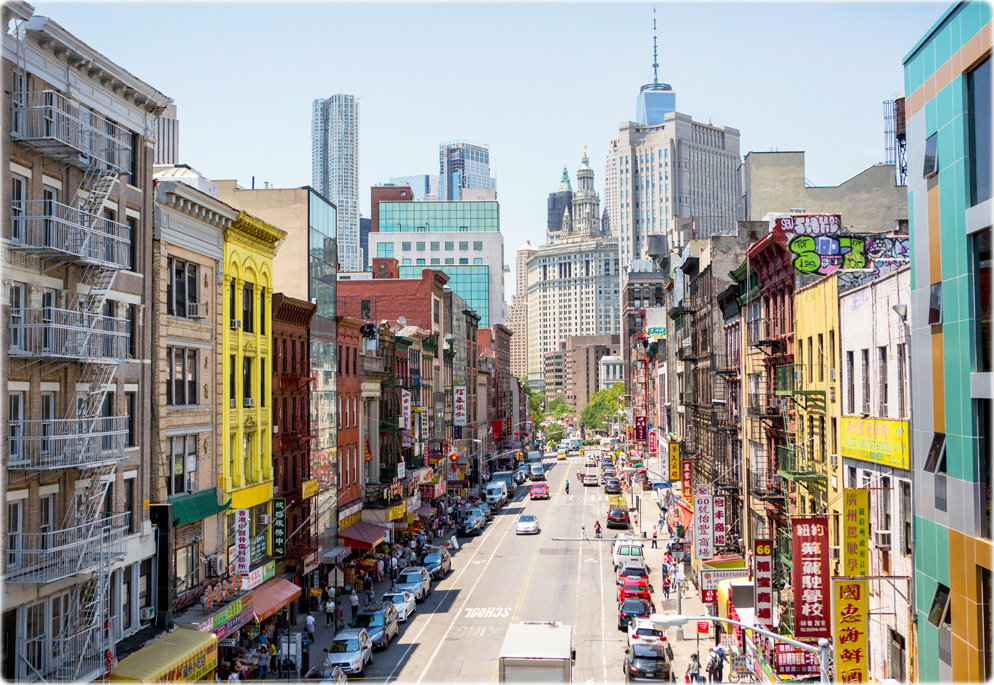

East Broadway in Chinatown neighborhood with the Municipal Building in the distance (credit: Brittany Petronella / NYC & Company).
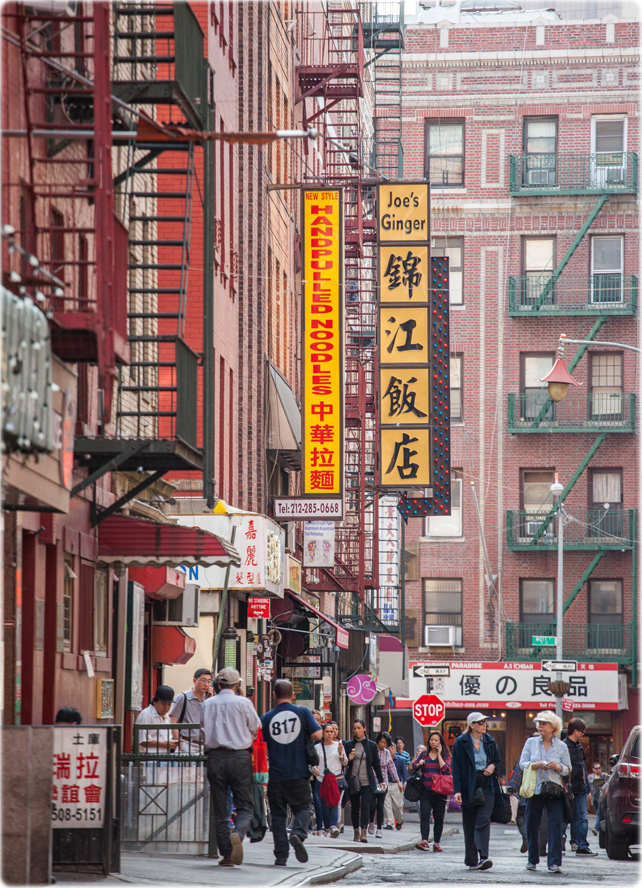
The predominant architecture in Chinatown is the late 19th through early 20th century buildings, specially tenement buildings buildings, which are predominantly flat-roofed and square with small often windowless apartments. The buildings had fire escapes which the residents would sleep on during the hot summer months.
There are also Federal and Greek Revival townhouses, factories, loft buildings, club houses, former stables, churches, and schools.

Celebration of the Lunar New Year in Chinatown (credit: Walter Wlodarczyk / NYC & Company).

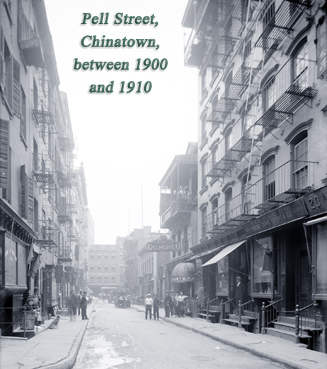






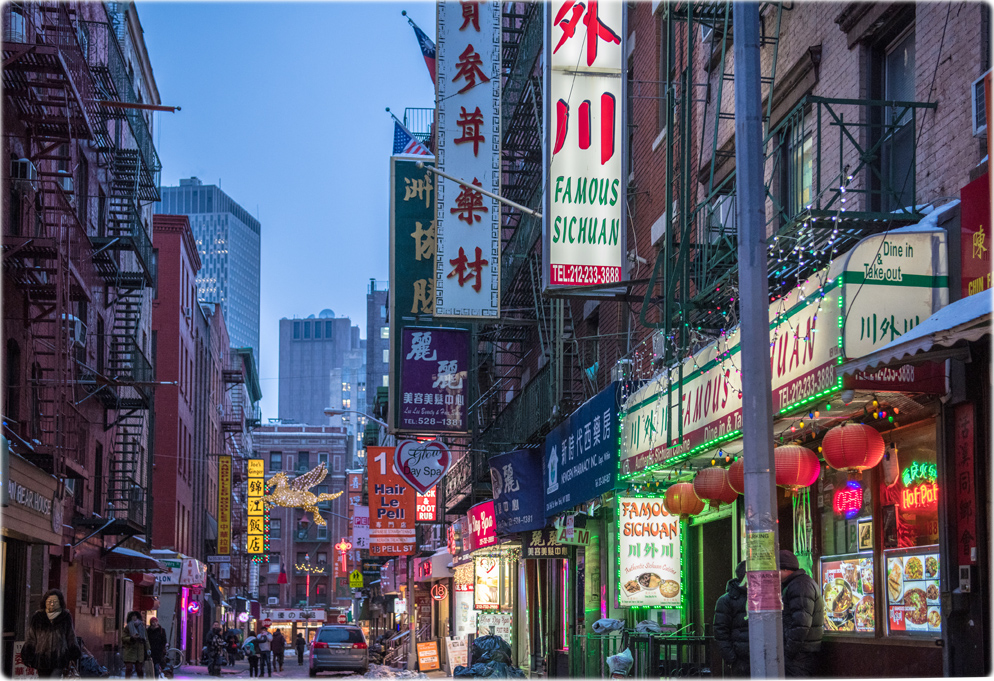
Pell Street in Chinatown (photo at right: Christopher Postlewaite / NYC & Company, below, Julienne Schaer).



Chinatown - New York City